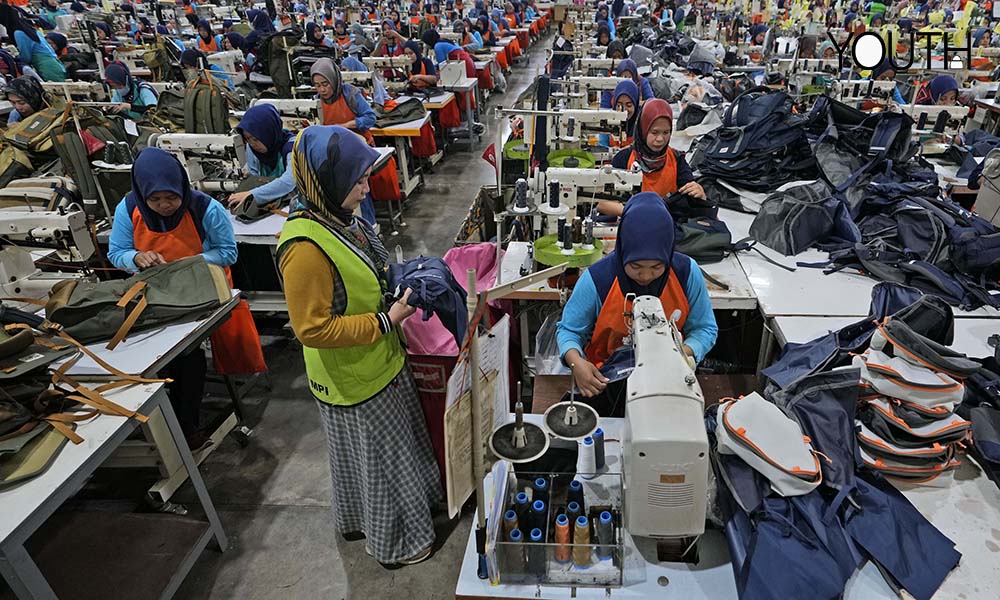
The reason of many bag factories moving to Southeast Asia
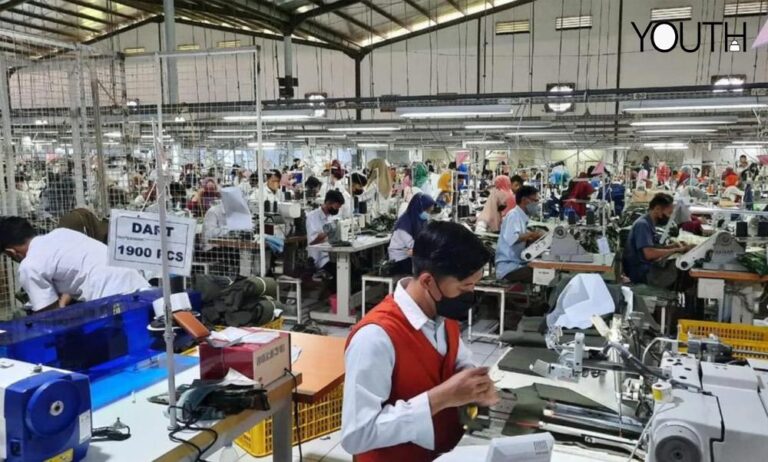
More and more Chinese factories are moving to Southeast Asia (such as Vietnam, Thailand, Indonesia, Malaysia, Cambodia, etc.). There are many reasons behind this, which can be mainly understood from the perspectives of cost, policy, market and industrial structure adjustment.
I. Rising Cost Pressures
(1). Rising Labor Costs
More than a decade ago, China’s manufacturing labor force was very cheap; however, wages in coastal areas (particularly Guangdong, Zhejiang, and Jiangsu) have now risen significantly.While like Vietnam, Cambodia, and Indonesia, worker wages are often only one-third to one-halfof those in China.
(2). High Land and Factory Costs
Industrial land prices, rents, and environmental costs are rising in China. Southeast Asian governments often offer lower rents and tax breaks to attract foreign investment.
(3).Stricter Environmental and Energy Consumption Requirements
China has increased environmental regulations in recent years, particularly for textile, leather goods, plastics, and chemical factories.
In Southeast Asia, these industries face relatively less environmental pressure (at least for now).
II. International Trade and Geopolitical Impact 1. US-China Trade Friction
1. The United States has imposed high tariffs on some Chinese-made goods.
To circumvent these tariffs, many factories have relocated production to Southeast Asia, exporting products to Europe and the United States as “Made in Vietnam” or “Made in Thailand.”
2.Diversified Supply Chain Layout (China + 1 Strategy)
Global brands (such as Nike, Apple, and Samsung) do not want to be overly dependent on the Chinese supply chain.
“China + 1” has become the mainstream strategy: retaining some production capacity in China while establishing a secondary base in Southeast Asia.
III. Preferential Policies in Southeast Asian Countries
1.Tax Reductions and Land Subsidies
For example, Vietnam’s industrial parks offer foreign-invested enterprises a 5-10 year tax holiday.
2.Trade Agreement Advantages
ASEAN has signed free trade agreements with Europe, the United States, and Japan.
ASEAN member countries enjoy the benefits of the RCEP (Regional Comprehensive Economic Partnership), which results in lower export tariffs.
IV.Manufacturing Transformation and Upgrading Division of Labor
1.China’s Manufacturing Industry is “Climbing the Industrial Chain”
China is upgrading toward high value-added, intelligent manufacturing, and branding.
The relocation of low-end processing is a natural result of industrial upgrading.
2.Southeast Asia Takes Over Labor-Intensive Processes
For example: clothing, shoes and hats, luggage, furniture, and electronics assembly.
China, on the other hand, focuses on molds, equipment, upstream materials, and R&D.
Youth light industry Co.,Ltd pays close attention to the international situation and lay out the global supply chain. We have established a stable supply chain for handbags and backpacks in Cambodia and Indonesia. For clients that have strategy of establishing supply chain outside of China, we can be your best partner.
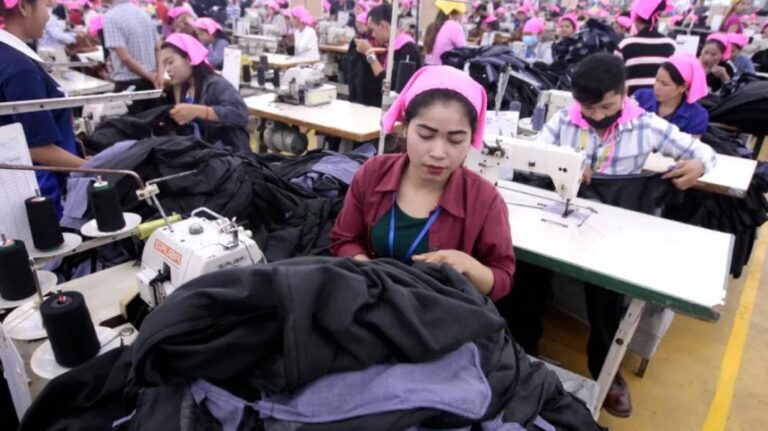
China vs Vietnam — Bag Manufacturing Industry Comparison (2025)
Vietnam has a growing handbags & bag-manufacturing sector: OEM/ODM factories produce handbags, totes, backpacks, travel bags, etc. Benefiting from competitive labor costs compared to China, many factories are capable of working with international-brand requirements (quality, compliance, supply chain traceability) and some focus on sustainability (eco-bags, recycled materials)favorable trade agreements (e.g., the EVFTA, CPTPP) which help its export competitiveness,
According to one sourcing-agent website, Vietnam has “about 1,000 industrial enterprises … in bag and briefcase production”, plus ~300,000 household enterprises in craft villages.
- The industry is clustered in three major regions:
- Southern Vietnam (around Ho Chi Minh City / Bình Dương Province) — large scale, export-oriented.
- Northern Vietnam (around Hanoi / nearby provinces) — leather goods, somewhat higher skill.
- Central Vietnam (around Da Nang) — emerging, artisanal, niche.
many bag factories in Vietnam are from or associated with Chinese investors because of China-US trade friction.
Now total effective duty for handbags from Vietnam under code 4202.22.0000 might be approximately 17.6% (base) + 20% (reciprocal) = ~37.6%, provided the item qualifies and is not subject to other adjustments (such as transshipment penalties)
Weaknesses & Risks:
- Supply-chain completeness: While Vietnam’s supply-chain is improving, in many cases still relies on imported components (zippers, hardware, specialised leather) which can raise cost or lead-time. Most delivery time in Vietnam is doubled than in China.
- High MOQ: Only very large quantity orders are competitive producing in Vietnam. For MOQ below 5000 per unit, the cost in Vietnam is much higher than in China mainland.
- Quality/skill variation: Some factories are newer and may not match the highest standards of long-established Chinese factories for ultra-high-end luxury bags.
- Trade/Origin risk: With recent U.S. trade developments, there is risk around “transshipment” (goods with large Chinese content assembled in Vietnam) which could face penalties.
- Infrastructure variation: Not all regions are equal; central and northern regions may have lower cost but also longer lead-times or le
Comparison list:
Category | China (Guangzhou, Shiling, Quanzhou, Yiwu, etc.) | Vietnam (Ho Chi Minh City, Binh Duong, etc.) |
Labor Cost (average monthly wage) | RMB ¥6,000–8,000/month for general workers (higher in coastal areas) | VND 7.1–7.7 million/month (~US$270–295, ~¥2,000–2,200) |
Land / Factory Rent | Higher in coastal provinces: typically ¥25–40/m²/month | Lower: ¥10–20/m²/month, depending on industrial park and province |
Electricity & Energy Cost | Industrial power cost ≈ US$0.088/kWh (2024); environmental compliance adds cost | Industrial tariff ≈ US$0.083–0.084/kWh, but power stability varies by region |
Material Supply Chain (zippers, metal fittings, fabrics, leather) | Highly integrated — full local supply for zippers, hardware, PU, leather, molds, printing, plating | Partially dependent on imports from China (20–70% of components, depending on product type) |
Production Efficiency / Workforce Skill | Skilled workers with strong QC culture; capable of high-end products & automation | Young workforce, lower cost, fast learners but less experience in high-precision QC |
Export Capability / Logistics | Mature export network, efficient logistics, reliable shipping schedules | Strong export focus (esp. to the U.S.); but high dependency on U.S. market (≈30% of GDP exposure) |
U.S. Tariff & Trade Risk | Directly subject to U.S. tariffs (e.g., 25%+ for many goods), but compliance experience is strong | Affected by “Reciprocal Tariff Regime” and transshipment audits; Chinese-origin content faces scrutiny |
Government Incentives | Focused on upgrading industry & automation; stricter environmental regulations increase costs | Strong FDI incentives (tax holidays, land rent reductions) to attract foreign factories |
Typical Product Positioning | R&D,design-intensive, complex craftsmanship, mid-to-high-end orders | Labor-intensive mass production; moving toward mid-range quality in 2024–2025 |
Five Key Decision Variables
- Total Labor + Management Cost – Vietnam offers cheaper labor, but training, QC, and compliance management can increase indirect costs.
- Supply Chain Completeness – China’s full ecosystem (hardware, zippers, PU, mold-making) gives faster turnaround; Vietnam relies on imported inputs.
- Tariff & Trade Policy Risk – Vietnam faces “reciprocal tariffs” and transshipment audits (if goods include Chinese inputs).
- Production Flexibility – China’s mature network supports quick response to large or urgent orders.
- Long-Term Strategy – Choose Vietnam for labor-intensive, long-run production; choose China for R&D-heavy, high-complexity, or fast-sampling operations.
Practical Insights
- For brands: Keep R&D, sampling, and key component sourcing in China; use Vietnam for final assembly to cut labor costs.
Ensure clear origin documentation to avoid U.S. “transshipment” penalties. - For OEM/ODM factories: Consider a “China Vietnam” dual setup — Chinese factory for molds, materials & QC; Vietnamese branch for sewing and assembly.
- For long-term stability: Assess Vietnam’s port logistics, power reliability, and wage inflation before major relocation.
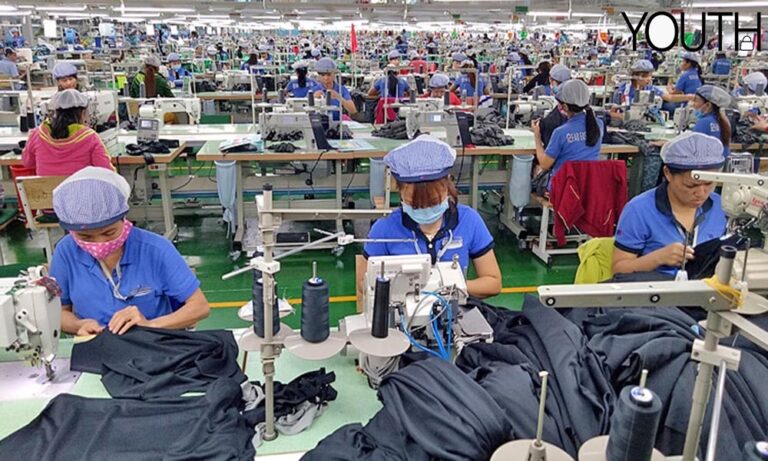
China vs Cambodia — Bag Manufacturing Industry Comparison (2025)
The Textile, Apparel, Footwear & Travel Goods Association in Cambodia (TAFTAC)-commissioned “Sector Brief: Garment, Footwear and Travel Goods (Issue 3, September 2024)” reports that Cambodia’s travel goods & bags segment lists about 120+ factories under its “Travel Goods & Bags” category in one published factory list. The travel goods & bags sub-sector (including handbags, luggage, backpacks) has been flagged as a growth segment, especially for exports to the U.S. and EU under preferential trade regimes there are around 120-130 bag / travel goods factories currently operating in Cambodia (not all necessarily full-scale, but registered under the category).
Main Factory Clusters for Bag Manufacturing in Cambodia
- Greater Phnom Penh & Kandal: central, best infrastructure.
- Kampong Speu: cost-competitive, strong recent growth in bag/travel goods.
- Sihanoukville / Preah Sihanouk: export-friendly with port access.
- Border clusters (Svay Rieng, Banteay Meanchey): transit/assembly oriented, good for certain low-cost flows.
What to Evaluate When Looking at a Cambodian Bag Factory
- Material and component sourcing: Confirm how localized hardware, zippers, linings are — imported components can add shipping cost/risk.
- Factory certifications / social compliance: Check whether the factory is registered under Better Factories Cambodia, has ISO/BSCI/SMETA etc. The inclusion of bags/travel goods under compliance frameworks is fairly recent.
- Export readiness & origin documentation: Ensure the factory can provide full origin traceability (important for exports to US/EU) and that it qualifies under preferential regimes.
- Lead-time & shipping logistics: Location near ports and reliable transport matter. Factories in Sihanoukville or near Phnom Penh typically have logistics advantage.
- Labor skill and tooling capabilities: Especially if your bags require custom moulding, hardware, or higher-end finishes — evaluate experience and equipment.
- Scalability & MOQ: How many sewing lines, output capacity, and how flexible are they with MOQs (minimum order quantities) — some factories may suit large volume, others are more mid-scale.
Comparison List:
Category | China (Guangzhou, Shiling, Quanzhou, Yiwu, etc.) | Cambodia (Phnom Penh, Kandal, Kampong Speu, etc.) |
Average Worker Wage (2025) | RMB ¥6,000–8,000/month (≈US$830–1,100) for general sewing workers | USD $204/month minimum wage in 2025 (garment/bag sector) |
Factory Rent / Land Cost | ¥25–40/m²/month in coastal manufacturing zones | US$2–5/m²/month, depending on province and infrastructure |
Electricity Cost | US$0.088/kWh (average industrial rate) | US$0.14–0.17/kWh (among highest in ASEAN) |
Supply Chain Integration (zippers, fabric, hardware) | Highly integrated — complete domestic ecosystem for all materials and accessories | Low integration — most zippers, PU fabrics, and hardware are imported from China or Vietnam |
Labor Skill & Productivity | High: skilled operators, experience with automation and QC systems | Lower skill level, manual sewing dominant; limited automation |
Export Competitiveness | Mature export system, fast customs and logistics, diversified destinations (US, EU, Japan) | Export heavily dependent on U.S. & EU; ~45% of exports go to U.S. (2024) |
U.S. Tariff Situation (HTSUS 4202.22.0000) | Base MFN: ~17.6%, plus China-specific tariff (~25%) → ~42% total | Reciprocal tariff after July 2025 = ≈19%, plus MFN 17.6% → ~36.6% total |
Government Incentives | Strong support for high-tech, automation, and green manufacturing & automation; stricter environmental regulations increase costs | FDI incentives: tax holidays (6–9 yrs), duty-free machinery imports, cheap SEZ land |
Infrastructure & Logistics | Excellent: ports (Shenzhen, Guangzhou), stable power, express logistics | Improving but limited: Sihanoukville Port congested; power reliability still an issue |
Typical Order Type | Complex designs, OEM/ODM, branded and mid–high-end products | Labor-intensive, basic or mid-range mass production for export |
Trade Risk (U.S./EU) | High tariff pressure but strong compliance & traceability systems | Risk of origin verification if using Chinese raw materials (transshipment issues) |
Challenges & Risks
- Supply chain & component sourcing: While the assembly capability is growing, many bag factories still rely on imported components (zippers, hardware, specialty fabrics) which may raise cost/complexity.
- Trade / tariff risk: As bags/travel goods exports become more prominent, Cambodia is subject to global trade pressures and tariff regimes. For example, US-tariff negotiations could impact competitiveness. HTSUS 4202.22.0000 from Cambodia: base duty: ~16% (for many handbags under 4202.22. Reciprocal tariff (Cambodia): ~36% (post-adjustment). Estimated total duty: ~16% + 36% ≈ 52% ad valorem, assuming the product qualifies and no penalty rate applies.
- Quality & lead-time maturity: Some factories are newer and may not have decades of specialized bag manufacturing experience compared to older hubs in other countries. Brands requiring very high craftsmanship might find variation in skill-levels. Most delivery time in Cambodia is doubled than in China
- Geographic concentration: Many factories are in a few provinces — meaning infrastructure, labor availability, logistics vary widely outside major zones. Managing lead-time, transport, customs may be nontrivial.
Conclusion
In 2025, Cambodia offers major labor and tariff advantages but still depends heavily on Chinese materials, management expertise, and logistics.
The most resilient model is China–Cambodia hybrid production:
- China → raw materials, molds, hardware, R&D
- Cambodia → low-cost sewing and export assembly
This approach balances cost savings, tariff benefits, and supply chain reliability.
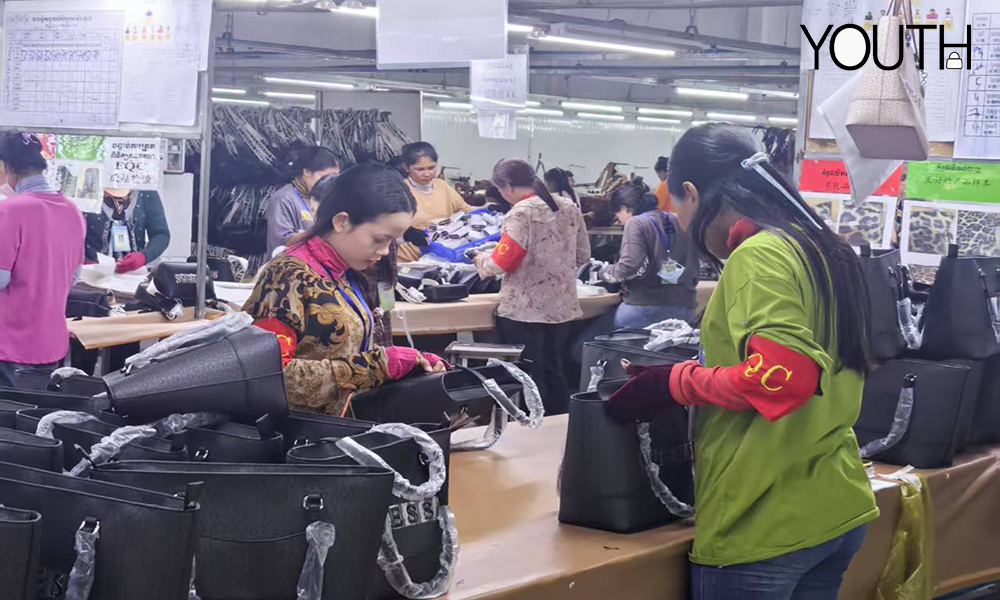
China vs Indonesia — Bag Factory Comparison (2025)
Indonesia is expanding its bag manufacturing (handbags, travel bags, suitcases) sector. For example: in 2023 Indonesia exported leather-outer surface handbags (HS 420221) worth USD 130.8 million. According to an industry report, Indonesia’s bag industry is achieving around 10% annual growth thanks to technological advancement
China is a major foreign investor in Indonesia: In 2022, Chinese direct investment in Indonesia reached US $4.55 billion, more than double the US $2.2 billion in 2021
A conservative estimate that there are around 300–400 bag manufacturing factories in Indonesia. Among them at least 300 factories in that branded segment alone.
Here are the main regional clusters of bag factories in Indonesia:
- West Java (Jawa Barat) — especially around Bandung, Bekasi/Banten corridor. This region benefits from proximity to Jakarta, integrated supply chains (textile, hardware).
- Central / Java interior & Yogyakarta — Smaller‐to‐medium factories, craftsmanship / leather goods focused, export‐oriented in certain towns.
- Bali & Nusa Tenggara (NTB, etc.) — Specialized in more artisanal, craft style bags (natural materials, eco bags) which target niche markets.
Estimated Total Duty for 4202.22.0000 from Indonesia to US: Base duty: 17.6%, Reciprocal tariff: 19%, estimated total duty = 17.6% + 19% = ~ 36.6% ad valorem.
Key Strengths for Indonesia bag factories
- Competitive labor & cost base: Indonesia offers labor cost advantages and increasing productivity in bag manufacturing. Labor cost is roughly 20-30% lower than China in certain regions.
- Diverse style & material capability: From mass-volume production to artisanal bags made of natural materials (rattan, coconut shell, woven straw) especially in regions like Bali.
- Strategic geography & export infrastructure: Regions near Jakarta, Surabaya, Semarang give access to ports and export-oriented industrial estate benefits.
- Growing export facilitation: Government support for local bag exporters to access markets (e.g., U.S.) via eased procedures.
Key Challenges & Risk Factors
- Supply chain gaps: While factories exist, many parts and components (zippers, hardware, certain leathers and fabric) may still need to be imported, which can add cost or lead-time. Usually delivery period in Indonesia is doubled than in China.
- High MOQ: Only very large quantity orders( for example 10,000+per unit) are competitive by producing in Vietnam. For MOQ below 5000 per unit, the production cost in Vietnam is much higher than in China mainland.
- Scale & sophistication: Some Indonesian bag factories may not yet match the scale or automation levels of factories in other major hubs (for ultra high-volume, ultra-premium production).
- Logistics & infrastructure inconsistency: While major regions have good access, some parts of the country face higher logistics cost/longer lead-time compared to more mature hubs.
- Regulatory/import material risk: Recent news shows Indonesia is reviewing import rules for various goods, which may affect access to imported materials needed for bag production.
Comparison list:
Category | China (Guangdong / Zhejiang / Fujian etc) | Indonesia (West Java, Central Java, Java islands) |
Labor cost & wage trends | Labour costs have been rising; e.g., Chinese skilled labor wages and cost indices increasing. | Indonesia offers lower labor cost than China in bag/textile manufacturing segments; one supplier-guide says Indonesia’s labor cost “20-30% lower than China” |
Supply chain / accessories / input ecosystem | Very mature chain: zippers, hardware, moulding, fabrics, PU/leather, finishing, tooling — many suppliers nearby. | Indonesia is improving but still less integrated than China; materials often imported; e.g., leather bag SMEs report need to import leather. |
Minimum order quantities (MOQs), lead times | China: broad capacity, flexible MOQs depending on factory; lead time for custom bags typically 30-45 days depending on complexity | Indonesia: Many bag manufacturers require MOQs of 500-1,000 units for custom orders; lead times often 60-90 days or longer for complex items. |
Quality / craftsmanship / innovation | Strong quality, good for mid to high-end bags, well-established export track record | Indonesia: Capable, especially for leather craft / artisan / eco-bags niche; but for large-scale complex production the chain is less deep |
Cost advantages/ disadvantages | Advantage: mature supply chain, short logistics, high capability. Disadvantage: higher labour and cost base, rising wages, tariff/trade risk. | Advantage: lower labour cost, emerging capabilities, favourable export incentives in some zones. Disadvantage: infrastructure/chain still developing, material import dependency, potentially longer lead times |
Export readiness / incentives | China has strong export infrastructure, logistics. | Indonesia: Reports of export subsidies / bonded zones for bag/suitcase producers. |
Suitability for product types | Best suited for: high-complexity designs, frequent style changes, brands requiring strong quality & supply chain responsiveness. | Best suited for: labour-intensive items, larger volume runs where cost is major driver and simpler designs, potentially eco/natural material niche. |
Trade & risk factors | China faces trade/ tariff risks (export markets, US/EU duties) and rising cost pressures. | Indonesia has potential but also risk from logistics, material import cost, regulatory & infrastructure hurdles. |
In 2025, Indonesia offers major labor and tariff advantages but still depends heavily on Chinese materials, management expertise, and logistics.
The most resilient model is China–Cambodia hybrid production:
- China → raw materials, molds, hardware, R&D
- Indonesia→ low-cost sewing and export assembly